


 021-51111890
 购物车()
购物车()
 sales@molnova.cn







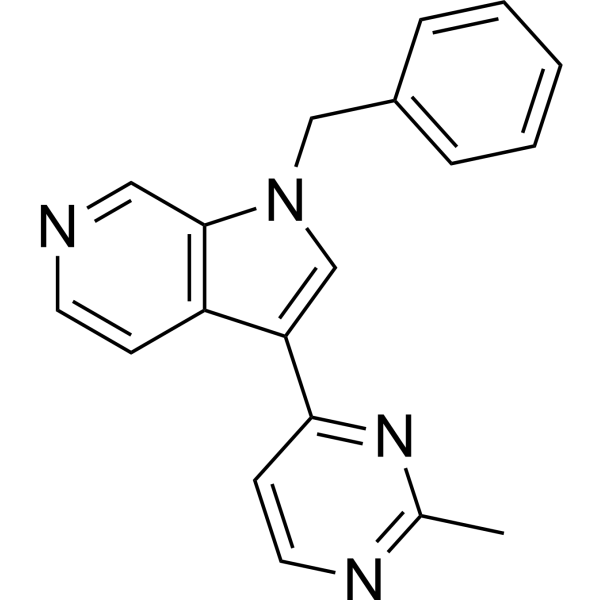
AZ-Dyrk1B-33
CAS No. 1679330-37-0
AZ-Dyrk1B-33 ( 3-(2-Methyl-4-pyrimidinyl)-1-(phenylmethyl)-1H-pyrrolo[2,3-c]pyridine )
产品货号. M26618 CAS No. 1679330-37-0
AZ-Dyrk1B-33 是一种有效的选择性 Dyrk1B 激酶抑制剂,IC50 为 7 nM。
纯度: >98% (HPLC)
 COA
Datasheet
HNMR
HPLC
MSDS
Handing Instructions
COA
Datasheet
HNMR
HPLC
MSDS
Handing Instructions
| 规格 | 价格/人民币 | 库存 | 数量 |
| 5MG | ¥929 | 有现货 |


|
| 10MG | ¥1492 | 有现货 |
|
| 25MG | ¥2465 | 有现货 |
|
| 50MG | ¥3525 | 有现货 |
|
| 100MG | ¥4671 | 有现货 |
|
| 200MG | ¥6291 | 有现货 |
|
| 500MG | 获取报价 | 有现货 |
|
| 1G | 获取报价 | 有现货 |
|
| 1 mL x 10 mM in DMSO | ¥636 | 有现货 |
|
生物学信息
-
产品名称AZ-Dyrk1B-33
-
注意事项本公司产品仅用于科研实验,不得用于人体或动物的临床与诊断
-
产品简述AZ-Dyrk1B-33 是一种有效的选择性 Dyrk1B 激酶抑制剂,IC50 为 7 nM。
-
产品描述AZ-Dyrk1B-33 is a potent and selective Dyrk1B kinase inhibitor with an IC50 of 7 nM.(In Vitro):Administration of AZ-Dyrk1B-33 shows inhibition of phosphorylation of Dyrk pS421 in cells with an IC50 of 0.192 μM and no effect in sensitization.
-
体外实验AZ-Dyrk1B-33 shows inhibition of phosphorylation of Dyrk pS421 in cells with an IC50 of 0.192 μM.AZ-Dyrk1B-33 shows no effect in sensitization.
-
体内实验——
-
同义词3-(2-Methyl-4-pyrimidinyl)-1-(phenylmethyl)-1H-pyrrolo[2,3-c]pyridine
-
通路Others
-
靶点Other Targets
-
受体CYP73A
-
研究领域——
-
适应症——
化学信息
-
CAS Number1679330-37-0
-
分子量300.365
-
分子式C19H16N4
-
纯度>98% (HPLC)
-
溶解度In Vitro:?DMSO : 125 mg/mL (416.17 mM)
-
SMILESCc1nccc(n1)-c1cn(Cc2ccccc2)c2cnccc12
-
化学全称——
运输与储存
-
储存条件(-20℃)
-
运输条件With Ice Pack
-
稳定性≥ 2 years
参考文献
1.1. Schalk M, et al, Werck-Reichhart D. Piperonylic acid, a selective, mechanism-based inactivator of the trans-cinnamate 4-hydroxylase: A new tool to control the flux of metabolites in the phenylpropanoid pathway. Plant Physiol. 1998;118(1):209‐218.
产品手册


关联产品
-
Cis-Ligupurpuroside ...
cis-Ligupurpuroside B 是一种苯乙醇糖苷,可以从 L. purpurascens 中获得。
-
S-Gboxin
S-Gboxin 是 Gboxin 的活性类似物,具有有效的抗肿瘤活性。 S-Gboxin 抑制小鼠和人胶质母细胞瘤的生长(GBM,IC50:470 nM)。
-
P61 (343 - 355), M. ...
P61 (343 - 355), M. leprae